Last updated: July 9, 2026
A few decades ago, building a diversified portfolio meant either picking dozens of individual stocks yourself or paying a mutual fund manager a hefty fee to do it for you. Neither option was especially friendly to a beginner with a few hundred dollars and a full time job. Exchange traded funds changed that math completely, and in 2026 they have become the default way most everyday investors, in the US, UK, Canada, and Australia alike, build long term wealth.
The scale of that shift is hard to overstate. Combined US ETF assets hit $15.60 trillion in May 2026, according to the Investment Company Institute, up more than 42% from a year earlier. For the first time in history, money parked in index funds (mutual funds and ETFs combined) now exceeds money in actively managed funds, a milestone the industry crossed in late 2024 and has widened through 2025 and into 2026. If you are wondering whether ETFs are still worth learning about this year, the honest answer is that the rest of the investing world already decided they are.
This guide walks through exactly what ETFs are, why they have become so dominant, which ones tend to show up on serious long term portfolios in 2026, and how to think about building your own ETF portfolio without getting lost in ticker symbols and jargon.
Quick Summary: Key Takeaways
US ETF assets reached $15.60 trillion in May 2026, and indexed funds now hold more money than actively managed funds for the first time in industry history.
Low cost, broad market ETFs like VOO, IVV, and VTI charge as little as 0.03% a year, meaning roughly $3 in fees for every $10,000 invested annually.
Dividend focused ETFs such as SCHD and VYM offer different tradeoffs between current yield and long term total return, and the difference comes down to how each fund screens its holdings.
ETFs generally offer better tax efficiency than traditional mutual funds because of how shares are created and redeemed, a structural advantage confirmed by the SEC's own investor education materials.
A well built beginner ETF portfolio typically needs only three to five funds to achieve real diversification across US stocks, international stocks, bonds, and sometimes gold.
The biggest mistake beginners make isn't picking the wrong ETF, it's not sticking with a plan long enough for compounding to work.
Table of Contents
What Is an ETF?
Why ETFs Are Popular in 2026
Different Types of ETFs
Best ETFs to Buy in 2026
ETF vs. Mutual Funds
ETF vs. Individual Stocks
ETF Risks
How to Build an ETF Portfolio
Beginner ETF Investing Tips
Common Mistakes
Expert Opinions
Frequently Asked Questions
Conclusion
Sources & References
What Is an ETF?
An exchange traded fund is a basket of securities, stocks, bonds, commodities, or a mix of all three, that trades on a stock exchange throughout the day, just like an individual share. When you buy one share of an ETF, you are effectively buying a small slice of everything that fund holds. Buy one share of a total stock market ETF, for instance, and you instantly own a fractional stake in thousands of companies at once.
The US Securities and Exchange Commission describes ETFs as investment companies that combine features of both mutual funds and individual stocks, in that they pool investor money into a diversified portfolio while still trading with the flexibility of a stock. Most ETFs are passively managed, meaning they simply track an existing index, like the S&P 500 or the Dow Jones US Dividend 100 Index, rather than relying on a manager trying to pick winners.
That passive structure is central to why ETFs have become so popular. There is no research team to pay, no analyst bonuses to fund, and no need to trade frequently, all of which keeps costs dramatically lower than actively managed alternatives.

Why ETFs Are Popular in 2026
A few forces have converged to make 2026 a genuine high water mark for ETF adoption.
Cost has become an even bigger differentiator. According to ICI's Trends in the Expenses and Fees of Funds data, average ETF expense ratios have kept trending lower for years, and the gap between a typical actively managed mutual fund and a comparable low cost ETF now regularly exceeds a full percentage point annually. Over a multi decade holding period, that gap compounds into a meaningful difference in ending wealth.
Index investing keeps outperforming most active managers. Morningstar's long running Active/Passive Barometer has consistently found that the majority of actively managed US equity funds underperform their passive benchmark counterparts over 10 and 15 year periods, net of fees. That is not a controversial finding inside the industry anymore, it is closer to consensus.
Flows have shifted decisively. ETF assets grew by roughly $3.2 trillion in 2025 alone, powered by a record $1.49 trillion in net new investor money, according to industry data compiled from ICI figures, compared to less than $1 trillion of growth for mutual funds over the same period, much of which came from market appreciation rather than fresh investment.
Tax efficiency matters more as portfolios grow. The ETF creation and redemption process, explained in detail by Fidelity's own investor education materials, allows most ETFs to avoid distributing capital gains to shareholders the way traditional mutual funds often do, which can meaningfully reduce an investor's annual tax bill in a standard taxable brokerage account.
Access has gotten dramatically easier. Nearly every major brokerage now offers commission free ETF trading and fractional shares, removing the two biggest historical barriers, cost per trade and minimum investment size, that used to keep beginners on the sidelines.
Different Types of ETFs
Not all ETFs serve the same purpose, and understanding the categories is the real foundation of building a sensible portfolio.
Broad market and index ETFs track an entire market or major index, such as the S&P 500 or the total US stock market, offering instant diversification across hundreds or thousands of companies in a single purchase.
Dividend ETFs focus on companies that pay, and often consistently grow, dividends, appealing to investors who want current income alongside long term growth.
Growth ETFs concentrate on companies expected to grow revenue and earnings faster than the broader market, typically technology and consumer discretionary heavy, with higher volatility as a tradeoff.
Value ETFs target companies trading at lower valuations relative to their fundamentals, a style that has historically outperformed during certain market cycles, particularly ones following a drawdown.
Bond ETFs hold government, corporate, or municipal debt, providing income and a ballast against stock market volatility, especially useful for investors closer to retirement.
Gold and commodity ETFs offer exposure to physical assets like gold without the hassle of storage or insurance, often used as a portfolio diversifier during inflationary or geopolitically uncertain periods.
International and global ETFs provide exposure to companies outside your home country, reducing the concentration risk of holding only domestic stocks.
Sector and thematic ETFs narrow in on specific industries or trends, such as technology, healthcare, or clean energy, useful for targeted bets but generally riskier than broad market funds.
Bitcoin and crypto ETFs are a newer category that has grown rapidly since US spot Bitcoin ETFs launched in January 2024, giving investors regulated exposure to digital assets through a standard brokerage account.[Insert Pie Chart: ETF Categories by Total US Assets 2026]
Best ETFs to Buy in 2026
There is no single "best" ETF for every investor, since the right choice depends heavily on your goals, time horizon, and risk tolerance. What follows is an honest look at the ETFs that consistently show up in serious, long term portfolios across each major category, along with the real numbers behind them.
S&P 500 ETFs
For most beginners, a low cost S&P 500 ETF remains the single most reasonable starting point, offering instant exposure to roughly 500 of the largest US companies in one purchase.
ETF | Issuer | Expense Ratio | Notable Detail |
|---|---|---|---|
VOO (Vanguard S&P 500 ETF) | Vanguard | 0.03% | Among the largest ETFs in the world by assets, over $1 trillion |
IVV (iShares Core S&P 500 ETF) | BlackRock iShares | 0.03% | Nearly identical to VOO in cost, structure, and performance |
SPY (SPDR S&P 500 ETF Trust) | State Street | 0.0945% | The original ETF, launched in 1993, favored by active traders for its liquidity and options market |
VOO and IVV are functionally interchangeable for long term, buy and hold investors, both tracking the same index at the same rock bottom 0.03% expense ratio, or roughly $3 a year for every $10,000 invested. SPY costs more, about $9.45 a year per $10,000, because of its older unit investment trust structure, which cannot reinvest dividends internally or lend securities the way VOO and IVV can. That structural difference is why most long term investors lean toward VOO or IVV, while SPY remains dominant among traders who value its unmatched liquidity and options market depth.
[Insert Line Chart: S&P 500 ETF Performance 2021-2026]
Dividend ETFs
Dividend ETFs split into two broad philosophies: chasing the highest current yield, or screening for quality companies with sustainable, growing payouts.
ETF | Issuer | Expense Ratio | Approach | Trailing Yield (approx.) |
|---|---|---|---|---|
SCHD (Schwab US Dividend Equity ETF) | Charles Schwab | 0.06% | Quality screen: tracks the Dow Jones US Dividend 100 Index, requiring at least 10 consecutive years of dividend payments plus cash flow and return on equity filters | ~3.3% |
VYM (Vanguard High Dividend Yield ETF) | Vanguard | 0.04% | Broader high yield index approach, heavier weighting toward mega cap and financial stocks | ~2.2% |
The performance difference between these two funds over different time horizons tells an important story about dividend investing philosophy. Over the trailing five years, VYM's heavier tilt toward mega cap and financial stocks helped it outperform. Over ten years, and again through 2026, SCHD's quality screen has come out ahead, since that screen tends to hold up better through a full market cycle that includes a drawdown, rather than only during yield chasing rallies.
Growth ETFs
ETF | Issuer | Expense Ratio | Focus |
|---|---|---|---|
VUG (Vanguard Growth ETF) | Vanguard | 0.04% | Large cap US companies with above average growth characteristics |
QQQ (Invesco QQQ Trust) | Invesco | 0.20% | Tracks the Nasdaq 100, heavily concentrated in technology |
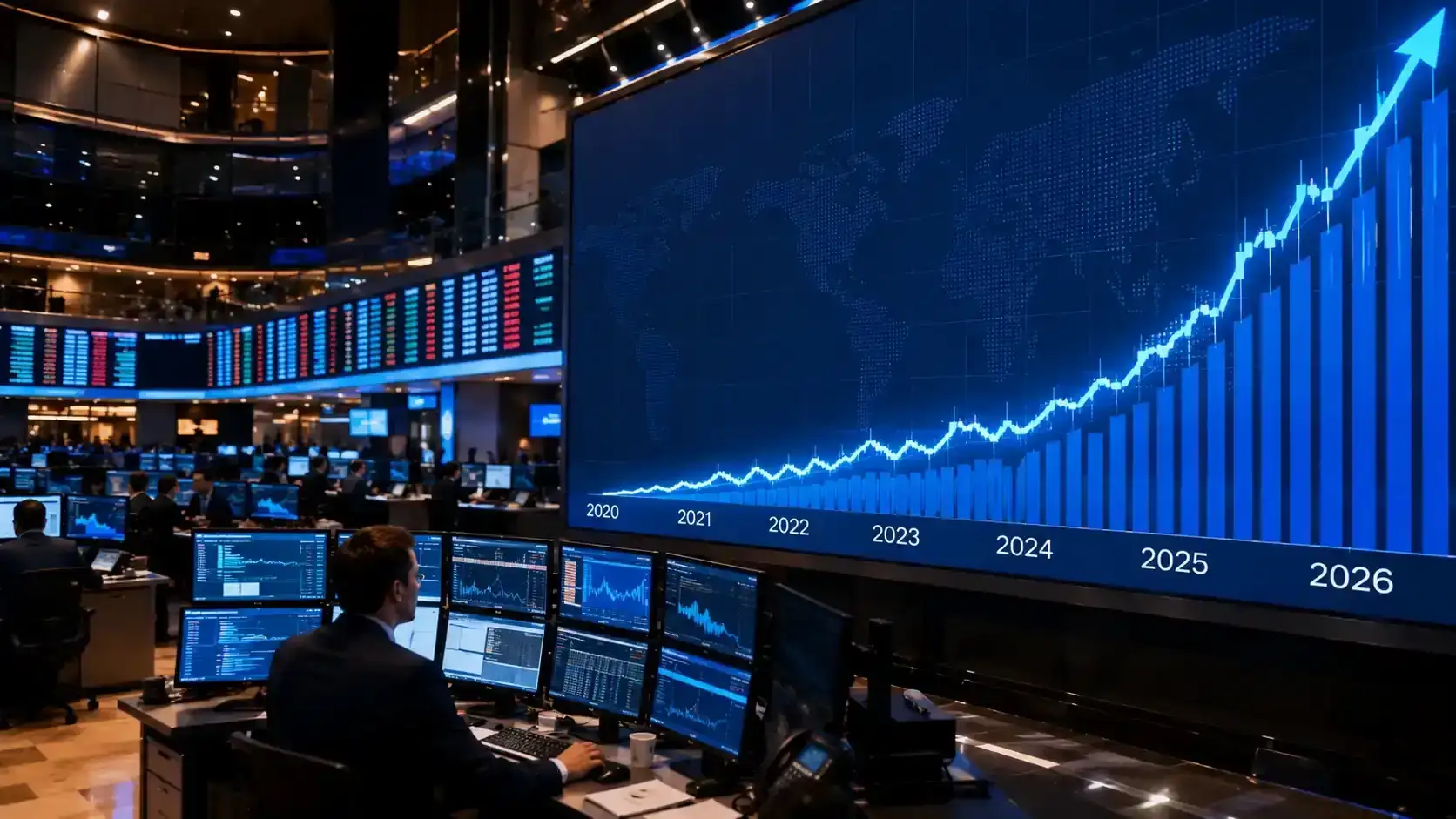
Growth ETFs tend to be more volatile than broad market funds, since they concentrate in a narrower set of sectors, but they have also historically delivered stronger returns during periods of strong corporate earnings growth and falling interest rates.
Value ETFs
ETF | Issuer | Expense Ratio | Focus |
|---|---|---|---|
VTV (Vanguard Value ETF) | Vanguard | 0.04% | Large cap US companies trading at lower valuations relative to fundamentals |
Value investing has gone through long stretches of underperformance relative to growth, particularly during the 2010s, but value focused funds have historically provided a useful counterbalance during periods when growth stocks face valuation pressure or rising rates.
Bond ETFs
ETF | Issuer | Expense Ratio | Trailing Yield (approx.) |
|---|---|---|---|
BND (Vanguard Total Bond Market ETF) | Vanguard | 0.03% | ~4.06% |
AGG (iShares Core US Aggregate Bond ETF) | BlackRock iShares | 0.03% | ~4.03% |
Both funds track a broad, investment grade US bond index and are nearly interchangeable, similar in spirit to the VOO versus IVV comparison in the equity world. Bond ETFs generally play a stabilizing role in a portfolio, providing income and dampening overall volatility, which becomes more important the closer an investor gets to needing the money.
Gold ETFs
ETF | Issuer | Expense Ratio | Structure |
|---|---|---|---|
GLD (SPDR Gold Shares) | State Street | 0.40% | Physically backed by gold bullion held in vaults |
IAU (iShares Gold Trust) | BlackRock iShares | 0.25% | Also physically backed, generally cheaper for long term holders |
Gold ETFs let investors gain exposure to bullion prices without arranging physical storage or insurance. IAU's lower expense ratio has made it the preferred choice for buy and hold investors, while GLD's longer track record and deeper liquidity still attract active traders.
International ETFs
ETF | Issuer | Expense Ratio | Coverage |
|---|---|---|---|
VXUS (Vanguard Total International Stock ETF) | Vanguard | 0.05% | Developed and emerging markets outside the US |
VEA (Vanguard FTSE Developed Markets ETF) | Vanguard | 0.03% | Developed markets only, excluding the US |
International diversification remains one of the more underused tools available to everyday investors. US markets have outperformed international markets for much of the past decade, but that leadership has rotated across different periods historically, and a globally diversified portfolio reduces the risk of being overly concentrated in any single country's economic cycle.
[Insert Bar Chart: Expense Ratio Comparison Across ETF Categories]
ETF vs. Mutual Funds
Feature | ETFs | Mutual Funds |
|---|---|---|
Trading | Trades throughout the day like a stock | Priced once daily after market close |
Minimum investment | Often the price of one share, or a fraction with fractional shares | Sometimes requires a minimum, occasionally $1,000 or more |
Typical expense ratio | Generally lower, especially for index funds | Generally higher, especially for actively managed funds |
Tax efficiency | Generally more tax efficient due to the creation and redemption process | Can generate taxable capital gains distributions even in a flat or down year |
Transparency | Holdings typically disclosed daily | Holdings often disclosed monthly or quarterly |
Vanguard's own investor education materials note that the ETF structure's in kind creation and redemption process is a key reason ETFs tend to distribute fewer taxable capital gains than comparable mutual funds, an advantage that compounds meaningfully for long term investors in taxable accounts. That said, mutual funds still make sense in certain contexts, particularly inside workplace retirement plans that only offer mutual fund share classes, or for investors who specifically want automatic reinvestment without worrying about trade execution.
ETF vs. Individual Stocks
Feature | ETFs | Individual Stocks |
|---|---|---|
Diversification | Instant, across dozens to thousands of holdings | Requires buying many stocks yourself to diversify |
Research required | Minimal for index based funds | Significant, ongoing company level analysis |
Single company risk | Diluted across the fund's holdings | Concentrated, a single bad outcome can hurt disproportionately |
Control | Limited to the fund's methodology | Full control over exact holdings |
Upside potential | Tracks the market or category average | Can meaningfully outperform, or underperform, the market |
Individual stock picking can outperform index investing, but doing so consistently over long periods is genuinely difficult, even for professionals. Investor.gov, the SEC's own investor education site, encourages beginners to understand diversification as one of the most reliable ways to manage risk, and a single ETF can accomplish in one trade what would otherwise require buying dozens of individual companies.

ETF Risks
ETFs are not risk free, and treating them as a guaranteed path to wealth is a mistake.
Market risk. An ETF tracking the stock market will fall when the stock market falls. Diversification reduces company specific risk, but it does not eliminate broad market risk.
Tracking error. Some ETFs, particularly those covering less liquid markets or using more complex strategies, can deviate slightly from the performance of their underlying index.
Concentration risk within "diversified" funds. Some sector or thematic ETFs are far less diversified than their name implies, and even broad market cap weighted funds can become heavily concentrated in a handful of mega cap stocks during periods of narrow market leadership.
Liquidity risk in niche ETFs. Smaller, less traded ETFs can have wider bid ask spreads, making them more expensive to buy and sell than their expense ratio alone would suggest.
Leveraged and inverse ETF risk. Funds designed to deliver two or three times an index's daily return carry substantially higher risk and are generally unsuitable for long term, buy and hold investors due to how compounding works against them over time.
Currency risk in international funds. ETFs holding foreign securities are exposed to currency fluctuations in addition to the underlying market's performance.
How to Build an ETF Portfolio
A genuinely diversified ETF portfolio does not require dozens of holdings. Most financial professionals suggest that three to five well chosen funds can accomplish real diversification for the majority of individual investors.
A simple, illustrative example for a long term investor in their 30s or 40s might look like this. This is for educational purposes only, not a personalized recommendation, since the right allocation depends on your own goals, timeline, and risk tolerance.
Allocation | % of Portfolio | Example ETF | Purpose |
|---|---|---|---|
US total market or S&P 500 | 50% | VOO or VTI | Core domestic growth |
International stocks | 20% | VXUS | Geographic diversification |
US bonds | 20% | BND | Stability and income |
Gold | 5% | IAU | Inflation hedge and diversifier |
Dividend focused | 5% | SCHD | Income tilt |
[Insert Pie Chart: Sample ETF Portfolio Allocation]
The exact percentages matter far less than the underlying principle, spreading exposure across asset classes that do not all move in the same direction at the same time, and rebalancing periodically as your goals and time horizon evolve.
Beginner ETF Investing Tips
Start with broad market funds before narrowing into sectors or themes. A core S&P 500 or total market ETF gives you exposure to the overall economy's growth without betting on any single trend.
Prioritize low expense ratios. A difference of even half a percentage point compounds into a substantial amount of money over multiple decades, all else being equal.
Use dollar cost averaging. Investing a fixed amount on a regular schedule, rather than trying to time the market, removes much of the emotional guesswork from investing and tends to smooth out volatility over time.
Reinvest dividends automatically. Most brokerages offer commission free dividend reinvestment, which keeps compounding working in the background without requiring any action from you.
Think in decades, not months. ETFs are generally a long term wealth building tool, and short term price swings matter far less to an investor with a 20 or 30 year horizon than to someone trading actively.
Don't ignore bonds just because yields look modest compared to stocks. Bond ETFs like BND and AGG play a genuine stabilizing role, particularly as you get closer to needing the money.
Common Mistakes
Chasing last year's best performing sector ETF. Performance chasing is one of the most well documented ways individual investors underperform the very funds they own, buying in after a rally and selling after a decline.
Overlapping holdings without realizing it. Owning both a total market fund and an S&P 500 fund, for instance, creates significant overlap rather than genuine diversification.
Ignoring the expense ratio on niche or thematic funds. Specialized ETFs often charge meaningfully more than broad index funds, sometimes 0.50% or higher, a cost that needs to be justified by genuine conviction in that specific theme.
Panic selling during a downturn. Reacting emotionally to short term volatility is one of the most reliable ways to convert a temporary paper loss into a permanent one.
Underestimating how much a small fee difference compounds. The gap between a 0.03% and a 0.75% expense ratio might look trivial on a single year's statement, but over 30 years on a growing portfolio, it can meaningfully change your ending balance.
Not rebalancing. Letting one asset class grow to dominate a portfolio simply because it performed well recently quietly increases risk without any deliberate decision to take on more of it.
Expert Opinions
Morningstar's long running Active/Passive Barometer research has repeatedly found that the majority of actively managed funds fail to beat their low cost passive benchmarks over meaningful time horizons, net of fees, a central piece of evidence behind the broader industry shift toward indexing. The CFA Institute's own investor education resources similarly emphasize that costs are one of the few variables in investing an individual can actually control with certainty, since future returns are inherently uncertain but the fee you pay is not.
Fidelity's investor education team frames the ETF structure's tax efficiency as a genuine, structural advantage for taxable account investors, distinct from any argument about which specific holdings might outperform. And the SEC's Investor.gov consistently frames diversification, easily achieved through a broad market ETF, as one of the most reliable, evidence backed ways an individual investor can manage risk without needing to predict which specific company or sector will outperform in any given year.
[Insert Expert Quote Box]
Frequently Asked Questions About Best ETFs to Buy in 2026
What is the best ETF to buy in 2026 for beginners? For most beginners, a low cost, broad market ETF like VOO or IVV, both charging a 0.03% expense ratio and tracking the S&P 500, is a reasonable starting point. It offers instant diversification across roughly 500 large US companies in a single purchase, without requiring individual stock research.
Are ETFs better than mutual funds? For most taxable account investors, ETFs generally offer lower expense ratios and better tax efficiency due to their creation and redemption structure. Mutual funds can still make sense inside certain retirement plans that only offer mutual fund share classes, or for investors who specifically want automatic reinvestment features.
How many ETFs should a beginner own? Most financial professionals suggest that three to five well chosen ETFs, spanning US stocks, international stocks, and bonds at minimum, can achieve genuine diversification for the majority of individual investors. Owning dozens of overlapping funds rarely adds meaningful additional diversification.
Is VOO or SPY better? For long term, buy and hold investors, VOO is generally considered the more cost effective choice, charging a 0.03% expense ratio compared to SPY's 0.0945%, while tracking the identical S&P 500 index. SPY remains dominant among active traders due to its deeper liquidity and more established options market.
What is a good expense ratio for an ETF? Broad market index ETFs commonly charge between 0.03% and 0.10% annually. Specialized or actively managed ETFs can charge significantly more, sometimes 0.50% or higher. Generally, the lower the expense ratio for a comparable strategy, the more of your return you keep over time.
Do ETFs pay dividends? Many ETFs do pay dividends, passing through the dividend income generated by their underlying holdings to shareholders, typically on a quarterly basis. Dividend focused ETFs like SCHD and VYM are specifically constructed to emphasize this income component.
Are ETFs safe for retirement investing? Broad market ETFs are a common building block in retirement portfolios, but they carry market risk like any equity or bond investment, they are not principal protected. A mix of stock and bond ETFs, adjusted over time to become more conservative as retirement approaches, is a widely used approach, though the right mix depends on individual circumstances.
Can I lose money in an ETF? Yes. ETFs face market risk, and their value fluctuates with the price of their underlying holdings. A broad market ETF can and does decline in value during market downturns, though diversification generally reduces the risk of a single company's failure devastating your entire position.
What's the difference between an index fund and an ETF? An index fund is a strategy, tracking a specific market index, while an ETF is a structure, a fund that trades on an exchange throughout the day. Many index funds are available in both traditional mutual fund and ETF form, tracking the same underlying index but differing in trading mechanics, minimum investment, and often cost.
Should I buy gold ETFs alongside stock ETFs? Some investors use gold ETFs like GLD or IAU as a small diversifying allocation, often in the range of a few percentage points of a total portfolio, since gold has historically behaved differently than stocks during certain economic conditions. The right allocation, if any, depends on individual goals and risk tolerance.
Conclusion: Best ETFs to Buy in 2026 Summary
The rise of ETFs over the past two decades has fundamentally lowered the barrier to building a genuinely diversified, low cost investment portfolio, and 2026's numbers, $15.60 trillion in combined US ETF assets and indexed strategies now outpacing active management, reflect just how thoroughly that shift has taken hold across the entire industry, not just among individual retail investors.
None of that means picking ETFs requires no thought at all. Understanding the real differences between a fund like VOO and SPY, or SCHD and VYM, and matching your fund selection to your actual goals and time horizon, still matters. But compared to the alternative of researching and managing dozens of individual stocks, or paying a much higher fee for active management that more often than not underperforms its benchmark, a thoughtfully built ETF portfolio remains one of the most accessible, evidence backed paths to long term wealth building available to everyday investors today.
Related Guide: Read our complete breakdown on 2027 HSA Contribution Limits: $4,500 Self-Only and $9,000 Family.
Related Guide: Read our complete breakdown on How Much Can You Save Before Paying Tax on Interest in the UK?.
Related Guide: Read our complete breakdown on Should You Fix Your Energy Tariff Before October 2026?.
Related Guide: Read our complete breakdown on Top Budgeting Tools & Trackers to Help Households Save Money in 2025.
Related Guide: Read our complete breakdown on Debt Snowball vs. Avalanche: The Best Strategies for Paying Off Debt Fast.
Sources & Authoritative Citations
U.S. Securities and Exchange Commission, Investor.gov. Exchange-Traded Funds (ETFs)
Investment Company Institute. Release: Exchange-Traded Fund Data, May 2026
Investment Company Institute. Release: Active and Index Investing, May 2026
Investment Company Institute. ICI Fact Book Showcases Broad Array of Fund Industry Statistics, 2026 Edition
Vanguard. VYM, Vanguard High Dividend Yield ETF Product Profile
BlackRock iShares. IVV, iShares Core S&P 500 ETF Product Page
Charles Schwab. SCHD, Schwab U.S. Dividend Equity ETF Product Page
Fidelity. Investor education materials on ETF tax efficiency and the creation/redemption process.
Morningstar. Active/Passive Barometer research on active versus passive fund performance.
CFA Institute. Investor education resources on investment costs and long-term returns.
S&P Dow Jones Indices. S&P 500 Index and Dow Jones U.S. Dividend 100 Index methodology documentation.
Expense ratios, yields, and assets under management figures cited above reflect data available as of mid-2026 and face change. Always verify current figures directly with the fund provider before investing.
Financial Disclaimer
This article is for educational and informational purposes only and does not constitute personalized financial, investment, or tax advice. It is not a recommendation to buy or sell any specific security or fund. All investing, including in ETFs, carries risk, including potential loss of principal. Past performance does not guarantee future results. Consult a licensed financial advisor before making investment decisions.
About the Author
Admin Founder of FinanceFlows. Writes educational articles about investing, ETFs, dividend investing, passive income, and personal finance, sourced from trusted public references including the SEC, IRS, S&P Dow Jones Indices, Nasdaq, Fidelity, Charles Schwab, and Investor.gov.
Related Financial Guides & Tools
📊 Related Tool: Before allocating funds, compare how management fees drag down terminal balances over 20-to-30-year holding periods with our ETF return and expense ratio calculator. To see how automating regular monthly index fund contributions of $200 or $500 compounds over time, test your investment timeline in our compound interest calculator.
💰 See Exactly How Much Your ETF's Fees Cost You
A 0.75% expense ratio on $100,000 invested over 30 years costs you over $127,000 compared to a 0.03% index ETF. Run your own numbers to see the real dollar impact.
ETF Return & Fee Drag Calculator → What Is an ETF? →Frequently Asked Questions: Best etfs for beginners
What is best etfs for beginners and why does it matter?
Best etfs for beginners provides crucial financial direction for investors and households. Understanding best etfs for beginners helps you make informed allocation choices, reduce unnecessary fees, and optimize your overall returns.
How can you apply best etfs for beginners in your financial strategy?
To implement best etfs for beginners successfully, start by assessing your current risk profile and timeline. Consistently monitoring best etfs for beginners ensures your portfolio stays aligned with long-term goals.
What are common pitfalls to avoid with best etfs for beginners?
The most common mistake when evaluating best etfs for beginners is reacting to short-term market noise. Focus on verifiable data, compound growth, and proven principles when making decisions based on best etfs for beginners.