The Federal Reserve left its benchmark interest rate unchanged on July 29, 2026, marking the fifth hold of the year and the second policy meeting under new Fed Chair Kevin Warsh. The federal funds rate stays in its 3.50%–3.75% range, but the committee's tone has shifted: several officials now say a rate hike, not a cut, could be on the table before year-end if inflation doesn't cool.
Here's what actually changed, why it matters for your wallet, and what to watch next.
Quick Answer: Fed Holds Rates Steady in July 2026
The Fed did not change interest rates in July 2026. The federal funds rate remains between 3.50% and 3.75%. Markets initially fell on the decision, then partially recovered the next day as strong Big Tech earnings offset rate-hike worries. There is no Fed meeting in August, so the next opportunity for a rate change is the September 15–16, 2026 meeting.
What Happened at the July 2026 FOMC Meeting
The Federal Open Market Committee met July 28–29, 2026 and voted 9-3 to hold rates steady, a wider dissent than usual, signaling real disagreement inside the committee about the path ahead. Some officials pushed for a hike given inflation still running above the Fed's 2% target, while a minority wanted to keep policy exactly where it is.
Unlike his predecessor Jerome Powell, Chair Warsh has kept the committee's official statement noticeably shorter and has said he wants the Fed to communicate more plainly with the public going forward.
2026 FOMC Meeting Calendar
Meeting Date | Outcome | Fed Funds Rate Range |
|---|---|---|
Jan 27–28, 2026 | Held | 3.50%–3.75% |
Mar 17–18, 2026 | Held | 3.50%–3.75% |
Apr 28–29, 2026 | Held | 3.50%–3.75% |
Jun 16–17, 2026 | Held | 3.50%–3.75% |
Jul 28–29, 2026 | Held (9-3 vote) | 3.50%–3.75% |
Sep 15–16, 2026 | Next scheduled meeting | TBD |
Oct 27–28, 2026 | Scheduled | TBD |
Dec 8–9, 2026 | Scheduled | TBD |
There is no FOMC meeting scheduled in August, so this decision holds for roughly seven weeks the longest stretch without fresh guidance from the Fed all year.
Why the Fed Isn't Cutting Rates Yet
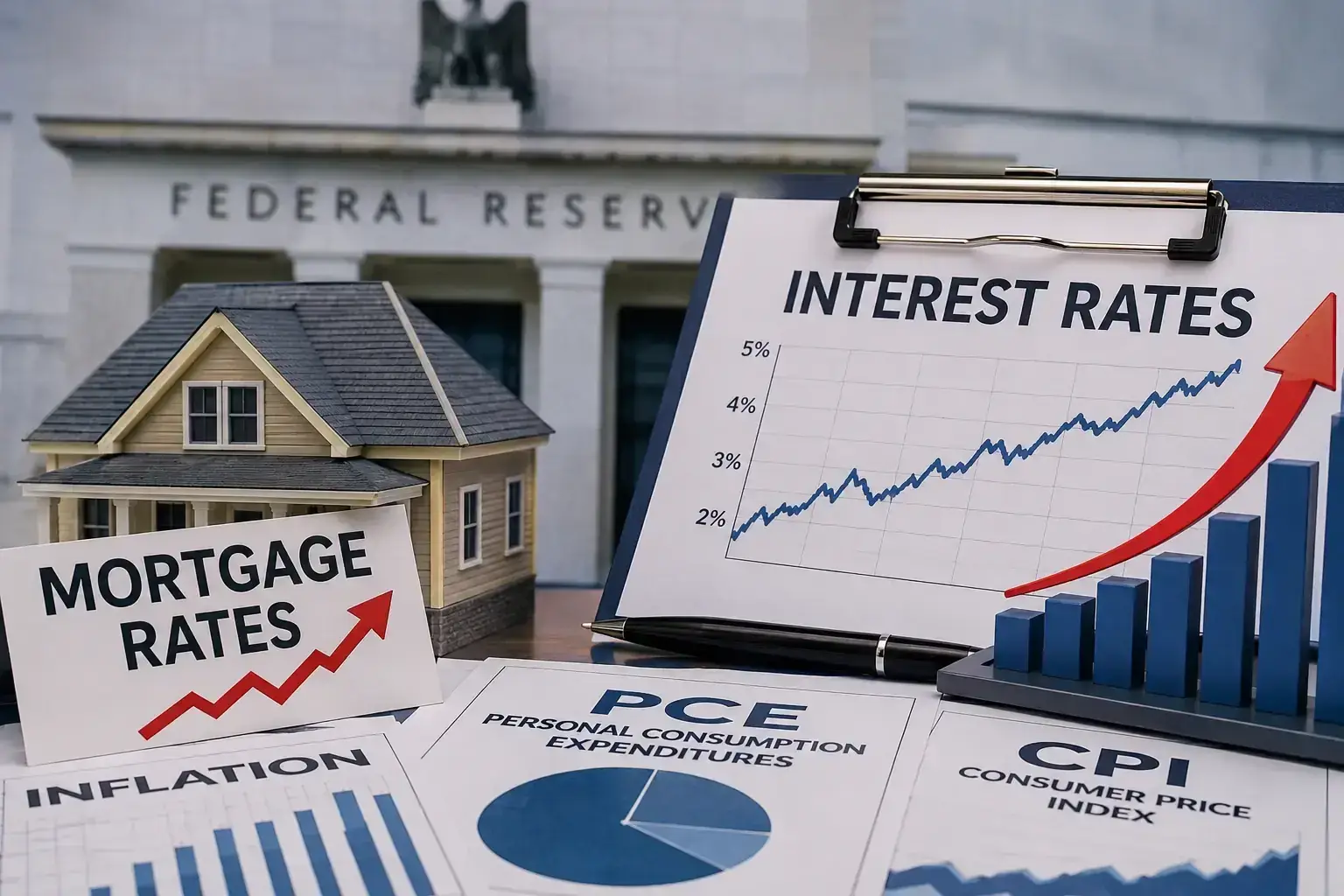
Inflation is the sticking point. Core price growth remains above the Fed's 2% goal, and Warsh has said directly that current prices are still too high for his comfort. The Bureau of Economic Analysis released the June Personal Consumption Expenditures (PCE) index on July 30 a number the Fed weighs more heavily than the more widely reported Consumer Price Index (CPI) when setting policy.
At the same time, President Trump used a White House appearance the same day to suggest Warsh personally favors lower rates but is being outvoted by the rest of the committee a rare public airing of tension between the administration and a Fed chair it appointed.
How This Affects Mortgage Rates
The Fed doesn't set mortgage rates directly. Thirty-year fixed mortgage rates track the 10-year Treasury yield far more closely than the Fed's overnight rate, and that yield moved up after the meeting climbing to roughly 4.657%, a sign investors now expect rates to stay higher for longer, not lower.
Rate Type | Direct Fed Link? | Recent Move (Post-Meeting) |
|---|---|---|
Federal funds rate | Yes set directly by Fed | Unchanged at 3.50%–3.75% |
2-year Treasury yield | Indirect | Fell ~4 bps to 4.236% |
10-year Treasury yield | Indirect | Rose ~5 bps to 4.657% |
30-year Treasury yield | Indirect | Rose ~9 bps to 5.193% |
30-year mortgage rate | Indirect | Tracks 10-year yield; stayed elevated |
High-yield savings/CDs | Indirect | Tends to track fed funds rate closely |
Bottom line for homebuyers: a Fed hold doesn't mean mortgage rates are frozen they can still drift up if bond investors expect stickier inflation or a future hike, which is exactly what happened this week. For a deeper breakdown of why 30-year rates have stayed elevated even without a hike, see our related coverage: Why Are Mortgage Rates Rising in 2026 Even as the Fed Holds Steady.
How This Affects Savers
Unlike mortgages, savings account APYs, CDs, and money market rates move much more closely with the fed funds rate. Since the Fed hasn't cut, savers with high-yield accounts are still earning close to the highs seen this cycle but that could change quickly once the Fed does eventually move. If you're shopping for a savings account right now, this is arguably the best window this year to lock in a strong APY before any future cut. See our current picks in Best High Yield Savings Accounts of July 2026.
How Markets Reacted
Stocks initially fell on the decision itself, then rebounded the next trading day. The S&P 500 gained roughly 1% on July 30 as strong Big Tech earnings Microsoft posted 17% constant-currency revenue growth, beating Street estimates gave investors a reason to look past the rate-hike chatter.
Asset | Reaction on Decision Day (Jul 29) | Reaction Next Day (Jul 30) |
|---|---|---|
S&P 500 | Fell ~1.2% | Rebounded ~1% |
Dow Jones | Fell ~507 points (0.98%) | Partial recovery |
Nasdaq Composite | Fell ~1.34% | Rebounded on tech earnings |
Gold | Fell alongside stocks | Stabilized |
Oil (WTI) | Elevated on Middle East tensions | Remained volatile |
For more on the broader market swings this month, see Stock Market Today 2026: How the US-Iran Conflict Is Moving Markets and Oil Price Surge 2026: Why Crude Is Spiking.
What to Watch Before the Next Meeting (September 15–16, 2026)
June PCE inflation data released July 30, weighed more heavily by the Fed than CPI
July and August jobs reports labor market data has taken a back seat to inflation in the Fed's recent messaging, but a sharp weakening could shift priorities
August CPI report the last major inflation read before the September meeting
Fed speeches during the seven-week gap with no scheduled meeting in August, individual Fed officials' public comments will be the main source of forward guidance
FAQ
Did the Fed raise or cut interest rates in July 2026? Neither. The Fed held rates steady at 3.50%–3.75% for the fifth meeting in a row in 2026.
Who is the Fed chair in 2026? Kevin Warsh, who was confirmed in May 2026 as Jerome Powell's successor. The July meeting was his second as chair.
Will the Fed raise rates next? Nine of twelve committee members' projections point toward a possible hike by year-end if inflation stays elevated, but this is not a certainty and depends heavily on upcoming inflation and jobs data.
When is the next Fed meeting? September 15–16, 2026. There is no FOMC meeting in August 2026.
Does a Fed rate hold mean mortgage rates will stay the same? No. Mortgage rates track the 10-year Treasury yield, not the fed funds rate directly, and that yield rose after this decision, so mortgage rates can still move even when the Fed doesn't act.
Should I lock in a high-yield savings account now? Savings rates move closely with the fed funds rate, so with the Fed on hold, current APYs remain attractive but they are exposed to any future rate cut. This isn't financial advice; compare current offers and consider your own timeline before deciding.
This article is for informational purposes only and is not financial advice. Rates and figures are accurate as of publication on July 30, 2026, and may change.
📊 Related Tool: Borrowers evaluating whether to lock in a new home loan during the central bank's rate pause can analyze full 30-year amortization costs on our fixed-rate mortgage calculator. Savers preserving liquidity during this elevated rate plateau can forecast their cumulative monthly returns using our compound interest calculator.
Frequently Asked Questions: Stock market daily update
What is stock market daily update and why does it matter?
Stock market daily update provides crucial financial direction for investors and households. Understanding stock market daily update helps you make informed allocation choices, reduce unnecessary fees, and optimize your overall returns.
How can you apply stock market daily update in your financial strategy?
To implement stock market daily update successfully, start by assessing your current risk profile and timeline. Consistently monitoring stock market daily update ensures your portfolio stays aligned with long-term goals.
What are common pitfalls to avoid with stock market daily update?
The most common mistake when evaluating stock market daily update is reacting to short-term market noise. Focus on verifiable data, compound growth, and proven principles when making decisions based on stock market daily update.