Quick Answer: Trump's New 50% Canada Tariffs Explained
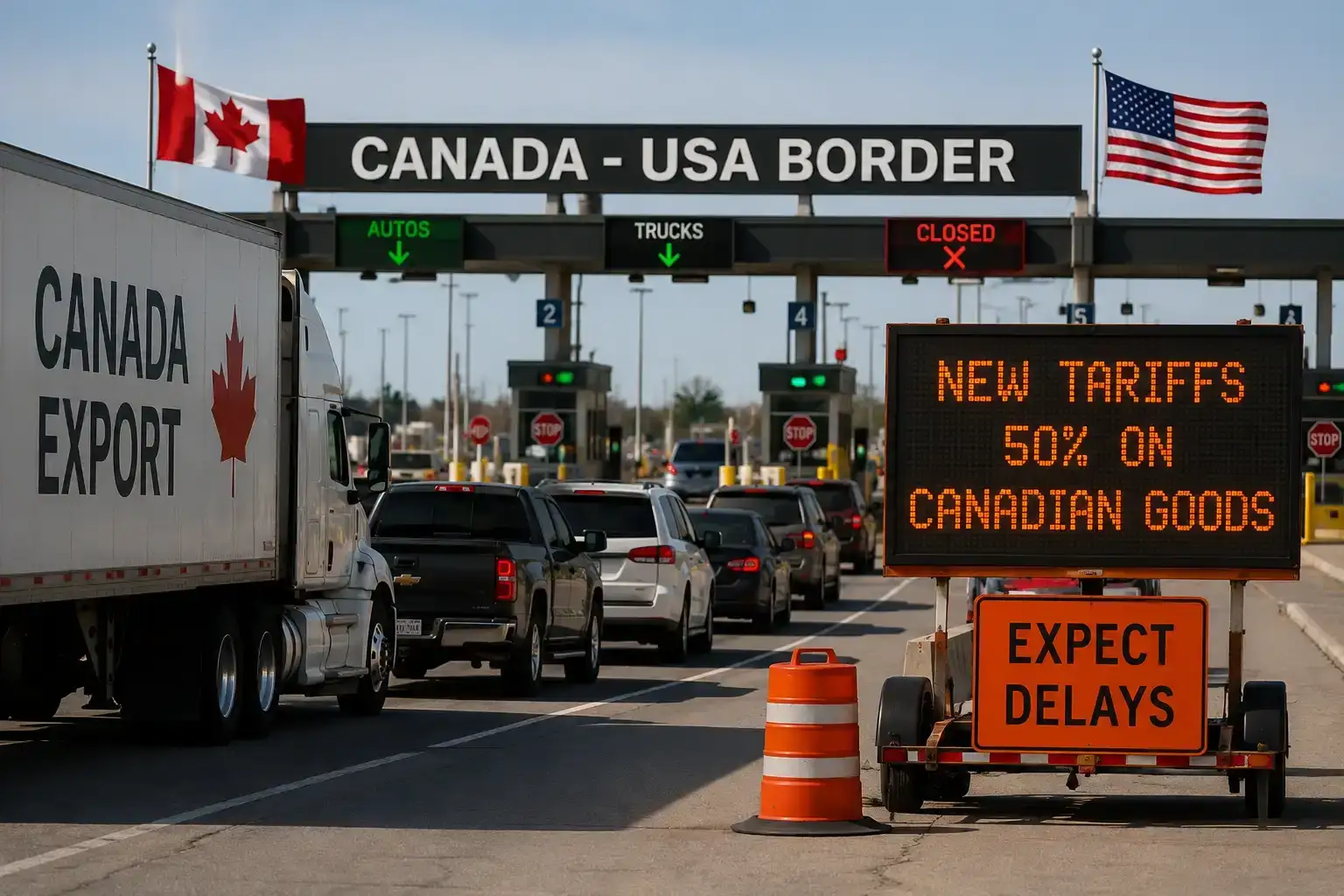
President Trump signed three separate proclamations on July 20, 2026, imposing an additional 50% tariff on Canadian autos, alcoholic beverages, and dairy products, using a rarely invoked legal authority known as Section 338 of the Tariff Act of 1930. The tariffs take effect August 19, 2026, giving importers roughly 30 days to prepare, and they apply regardless of whether the goods are covered under the USMCA free trade agreement. The White House says the move responds to what it calls discriminatory Canadian trade practices, including restrictions on U.S. alcohol sales and dairy quotas. Canada has called the move a regrettable escalation and is pushing for renewed negotiations before the deadline. Economists warn the tariffs carry real inflation risk, adding to a macro backdrop that's already pushing the Federal Reserve toward a more hawkish stance.
Key Takeaways: Trump's New 50% Canada Tariffs Explained
Trump signed three Section 338 proclamations on July 20, 2026, adding a 50% tariff on specific Canadian autos, alcohol, and dairy products
The tariffs take effect August 19, 2026, giving businesses about 30 days to prepare
Coverage extends beyond the headline categories to include goods like wine, hockey sticks, and cement
The tariffs apply even to goods that qualify for duty free treatment under the USMCA trade agreement
Energy, potash, goods already covered under Section 232 tariffs, and a handful of other categories, including fish and critical minerals, are excluded
The White House says Canadian provinces cut purchases of U.S. alcoholic beverages by about 81%, or $582 million, between March 2025 and February 2026
Canada is one of only two countries, along with China, that chose to retaliate against earlier Trump administration tariffs rather than negotiate
The Canadian Chamber of Commerce is urging both sides to use the 30 day window to reach a deal before the tariffs take effect
What Exactly Did Trump Sign, and Why Section 338?
On July 20, 2026, President Trump signed three separate proclamations invoking Section 338 of the Tariff Act of 1930, a law that had not been used in nearly a century, according to Al Jazeera's review of the announcement. Each proclamation imposes a 50% ad valorem tariff on a different category of Canadian goods: automobiles, alcoholic beverages, and dairy products.
The White House's official justification centers on what it describes as discriminatory treatment of American exports. According to the administration's own fact sheet, Canadian provinces and territories, with the exception of two, halted purchases and retail sales of American alcoholic beverages starting in 2025, a response to earlier rounds of Trump tariffs. The White House also pointed to Canada's dairy quota system, arguing that tariff rate quotas on U.S. cheese are far more restrictive than those Canada applies to cheese imported from the European Union, despite Canada having separate trade agreements with both the U.S. and the EU.
Notably, these new Section 338 tariffs apply regardless of whether a good would normally qualify for duty free treatment under the U.S. Mexico Canada Agreement, the trade pact that replaced NAFTA. That's a significant detail, since USMCA compliant goods have generally been shielded from earlier rounds of tariffs.
What's Actually Covered
While the headline categories are autos, alcohol, and dairy, the actual scope of the tariffs is broader than those three words suggest.
Category | Examples of Covered Goods | Notes |
|---|---|---|
Automobiles | Canadian made vehicles and auto parts | Stacks on top of the existing 25% tax on non U.S. parts in cars |
Alcoholic beverages | Wine and other Canadian alcohol exports | Cited as retaliation for provincial bans on U.S. alcohol sales |
Dairy | Cheese and other dairy products | Tied to Canada's dairy quota system, which the U.S. calls discriminatory |
Other covered goods | Hockey sticks, cement | Included in the broader Section 338 proclamations despite falling outside the headline categories |
Excluded categories | Energy, potash, Section 232 goods, fish, critical minerals | Specifically carved out, partly due to U.S. reliance on Canadian oil and fertilizer inputs |
Compiled from the official White House fact sheet, Al Jazeera, and trade compliance coverage from GHY International as of July 2026. Businesses importing Canadian goods should confirm exact tariff classifications with a licensed customs broker before the effective date.
These tariffs also stack on top of existing U.S. tariffs on Canadian goods, which already range from 15% to 50% on copper, aluminum, and steel, plus a separate 25% tax on non U.S. content in vehicles. For businesses and consumers alike, that means the cumulative tariff burden on some Canadian products is considerably higher than the 50% headline figure alone suggests.
Canada's Response and the Path to a Deal
Canadian Prime Minister Mark Carney, a former central banker who campaigned on taking a tougher "elbows up" stance toward the U.S., has had a notably frosty relationship with the Trump administration. The Canadian Chamber of Commerce responded to the announcement by pushing for a negotiated off ramp, with its president and CEO, Candace Laing, calling the move "a regrettable escalation" while noting that both sides now have a 30 day window to make progress before the tariffs take effect.
The broader context matters here too. The U.S. and Canada are currently negotiating the renewal of the USMCA, which lapsed earlier in the summer of 2026, though no face to face talks had been confirmed as of the tariff announcement. According to the White House, Canada is one of only two countries, alongside China, that chose to retaliate against earlier rounds of Trump administration tariffs rather than negotiate a settlement, a distinction the administration cited directly in justifying this latest escalation.
Why This Adds to Inflation Risk
Tariffs function, in practical terms, as a tax on imported goods, and that cost typically gets passed along to consumers and businesses in the form of higher prices, at least in part. A 50% tariff on Canadian autos, alcohol, and dairy arrives at a moment when inflation is already running well above the Federal Reserve's target, a dynamic we've covered in detail in our preview of the Fed's July 29 rate decision. Adding new tariff driven price pressure on top of the oil price surge we broke down in our full analysis of the 2026 US Iran conflict's effect on oil prices gives the Fed yet another reason to lean hawkish rather than cut rates.
Economists have flagged real risk here specifically because autos and dairy are both categories where American consumers have limited ability to simply switch to domestic alternatives in the short term, meaning tariff costs are more likely to show up directly in retail prices rather than being absorbed elsewhere in the supply chain.
What This Means for Your Wallet: Trump's New 50% Canada Tariffs Explained
If the tariffs take effect as scheduled on August 19, 2026, consumers should expect gradually higher prices on a specific set of goods: Canadian made vehicles and auto parts, Canadian wine and other alcohol imports, and cheese and dairy products sourced from Canada. Businesses that import any of the covered goods, including the less obvious categories like hockey sticks and cement, have a roughly 30 day window to review their supply chains and confirm exact tariff classifications before the deadline.
For everyday investors and savers trying to navigate a stretch with this many moving inflation drivers at once, oil, tariffs, and a Federal Reserve leaning toward hikes, all layered on top of each other, keeping some portion of cash in an account that at least keeps pace with inflation is worth considering. Our guide to the best high yield savings accounts of July 2026 covers where the strongest yields currently sit.
Key Takeaways Recap: Trump's New 50% Canada Tariffs Explained
President Trump's new 50% tariffs on Canadian autos, alcohol, and dairy, signed July 20, 2026, and set to take effect August 19, mark one of the most significant escalations yet in the ongoing U.S. Canada trade dispute, made possible through a rarely used legal authority that overrides normal USMCA exemptions. With coverage extending to goods like wine, hockey sticks, and cement, and a 30 day negotiating window still open, the situation remains fluid. For consumers and investors, the practical takeaway is straightforward: this is one more inflation pressure point layering onto an already complicated macro picture heading into the Fed's July 29 rate decision.
This article is for informational and educational purposes only and does not constitute financial, legal, or trade compliance advice. Tariff policy and effective dates can change quickly; businesses importing Canadian goods should consult a licensed customs broker for current guidance.
📊 Related Tools: Use our US Inflation & Purchasing Power Calculator to track how geopolitical events, energy spikes, and tariff changes impact real purchasing power. Use our Mortgage Payment & Interest Rate Calculator to see how Federal Reserve rate adjustments and Treasury yields change monthly borrowing costs.
Frequently Asked Questions: Canada tariffs explained
What is canada tariffs explained and why does it matter?
Canada tariffs explained provides crucial financial direction for investors and households. Understanding canada tariffs explained helps you make informed allocation choices, reduce unnecessary fees, and optimize your overall returns.
How can you apply canada tariffs explained in your financial strategy?
To implement canada tariffs explained successfully, start by assessing your current risk profile and timeline. Consistently monitoring canada tariffs explained ensures your portfolio stays aligned with long-term goals.
What are common pitfalls to avoid with canada tariffs explained?
The most common mistake when evaluating canada tariffs explained is reacting to short-term market noise. Focus on verifiable data, compound growth, and proven principles when making decisions based on canada tariffs explained.